
Aug 17, 2021 —
When Cris Winters started her first garden at the age of eight, she never imagined she’d become a professional artist using organic materials. Winters is the owner of Art at the Pink House, her studio and gallery in Saranac Lake. She says her path to making art full-time was less than straightforward.
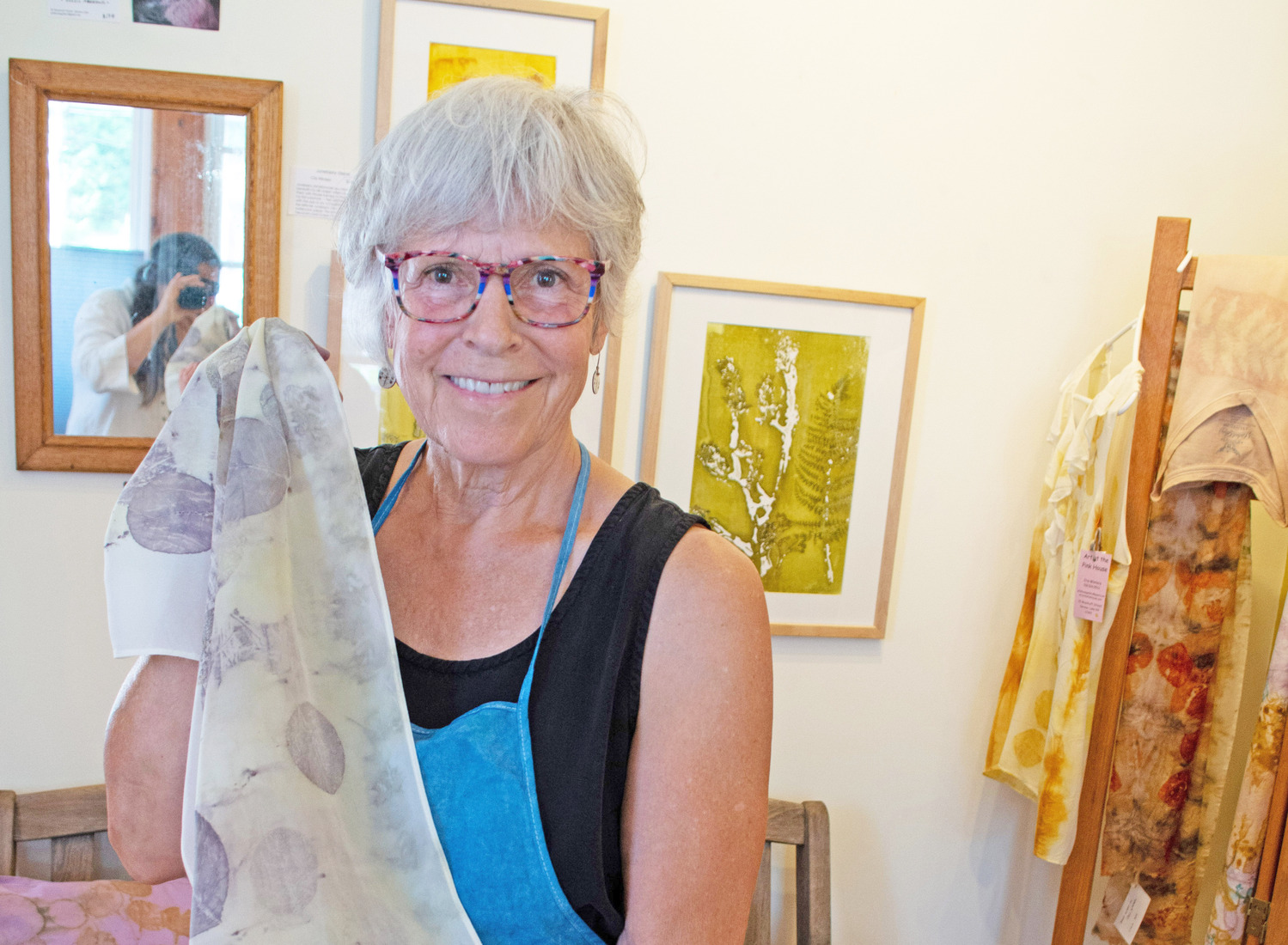
After studying botany during college, Winters worked various short-term jobs teaching and doing research. She got her Master’s in conservation biology in her early 50s, but Winters said that her age and gender made finding a steady job as a biologist difficult. After taking a mixed-media art class in 2008, she came home, rented a studio, and made a big change.
“I switched to art, I just sort of took this leap, and it has been fantastic.”
But she hasn’t left plants behind. Often they’re the basis of her artwork. Winters makes fiber art with a method called botanical contact printing, which uses plant parts to dye fabrics and paper. After laying various plants onto her materials, she wraps them tightly and heats them in a lobster steamer to release the natural pigments. Winters prints all kinds of things, from scarves to napkins to paper.
Combining art and science
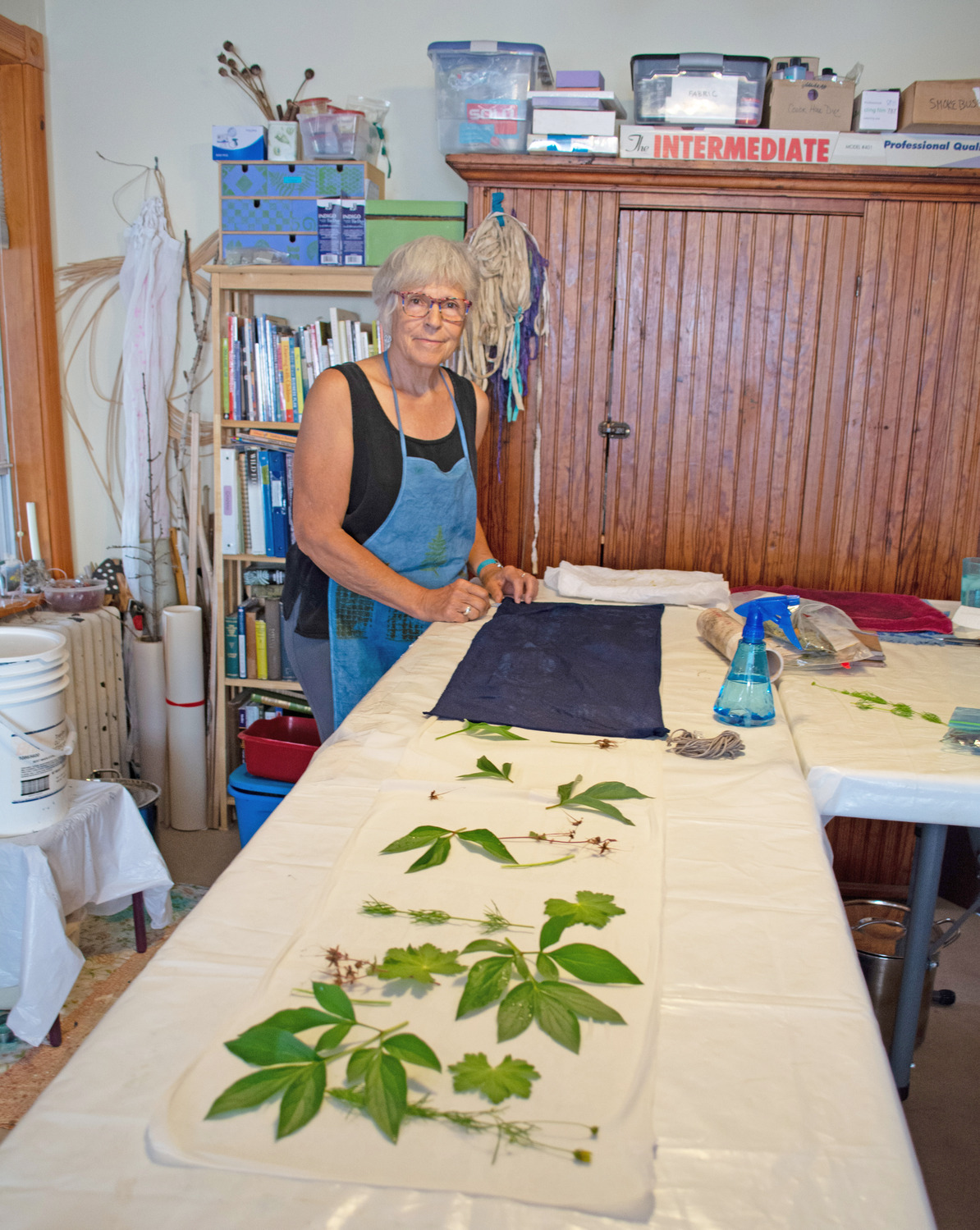
Winters says her work is at the intersection of art, science, and the natural world.
“I think science needs art to interpret it, and art needs science to inform it. Because I know something about plants, I was collecting things that I thought may have more pigments in them, and then I just had to experiment a lot and read what other people had found.”
For Winters, making art is more about exploration and practice than having an innate gift or talent.
“… anybody can do this stuff. But you have to work at it! It’s not about inspiration as much as it is about get your hands dirty and go do it! I teach a lot, and I learn that a lot of people are so afraid of the art process they don’t even want to begin.”
Artistic process
Winters says that exploring different materials, plants, and printing techniques is her favorite part of the work.
“I experiment a lot and I love surprises. If I didn’t, I could not be doing this work.”
Winters keeps records of her experiments, documenting what works and what doesn’t. Lately, she says she’s been throwing prints she doesn’t like into pots of natural dye.
“It involves a lot of different steps, a lot of different materials, and you get this quite unique result, I mean I could never make one of these again.”
Winters collects many of her organic materials herself, but says she also relies on friends to send her leaves from plants such as smokebush and eucalyptus that aren’t native to Saranac Lake.
Piecing it together in the North Country
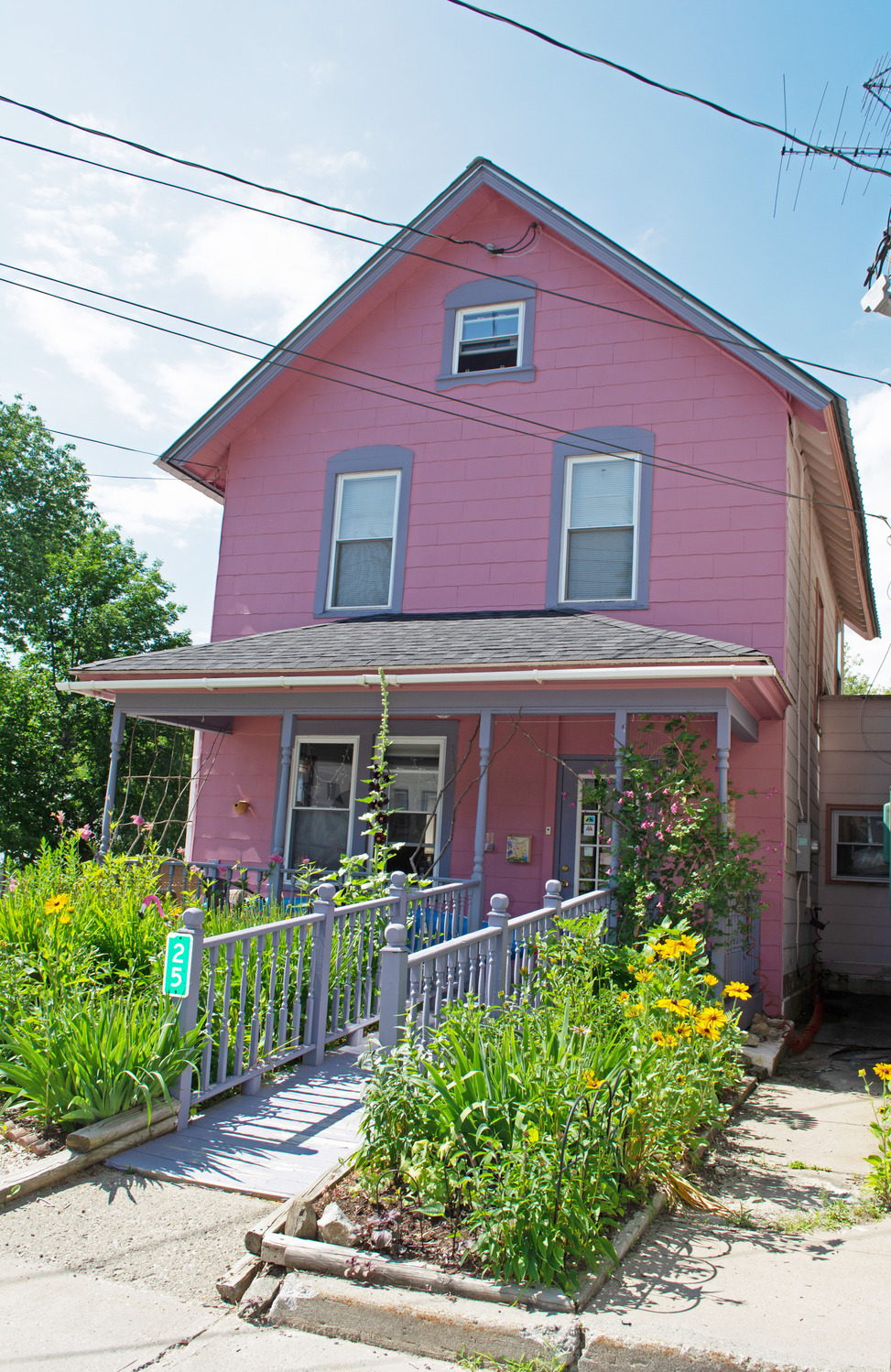
After buying a cabin in the Adirondacks, Winters fell in love with the area and eventually gave up her successful art business near Albany to move to the North Country in 2010. Five years later, she bought Art at the Pink House in Saranac Lake and opened it as a gallery. However, Winters says the lack of foot traffic made it challenging to keep the gallery open all the time while also making art. She’s since switched to opening by appointment, and now sells her art at other galleries, online, and at craft shows.
“Obviously it’s a hard thing to do, to make a living as an artist. I’m always adjusting…it’s all sort of a constant balancing act.”
Like many others in the North Country, Winters makes her living by piecing it together — in addition to selling her art and teaching classes, her other gigs have included teaching at Paul Smith’s College, working at a canoe outfitter, and renting out a cabin on AirBnB. After the pandemic hit, she started making printed face masks and opened an Etsy shop to reach more customers online. But, she says, the hustle is worth it.
“You give up economic security for freedom, I would say.”

Major support for North Country at Work comes from Wyncote Foundation, Humanities New York, and the National Archives.
 Find scores of work stories and thousands of work photos at http://ncpr.org/work

