
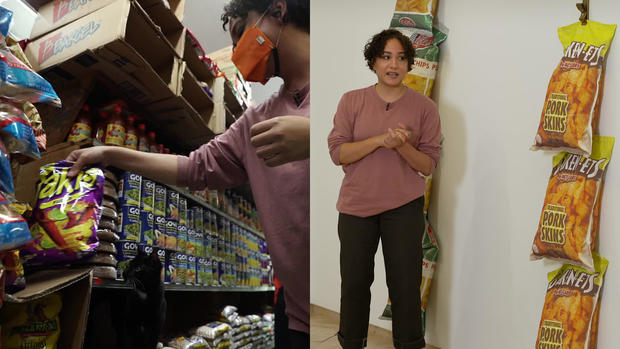
At Bodega, a corner store in East Harlem, New York, Lucia Hiero is rediscovering childhood food relics such as Coconete (the Dominican Republic’s coconut pastry) and Takis (the Mexican tortilla chips). This is an experience shared by many Varios (Latin regions) throughout the United States.
For Hiero, who holds a master’s degree in art from Yale University, Bodega is a light of inspiration, turning a bag of chips into a larger piece.
CBS News
Her purpose is to understand what is often overlooked … the products, the people who make them, and the communities that consume them are important.
“This work can be considered a kind of pretty Bodega art. And who are the people working to make these Frito-Lay? People who are actually late to sell them in these Bodegas Who is it? And what is the economy and how is it changing? “
The big, small, playful and provocative art of Hiero is one of the works of more than 40 Latin artists participating in the Manhattan Elm Theo del Barrio Triennale show.
CBS News
Correspondent Lilia Luciano asked, “What is the intention of this show?”
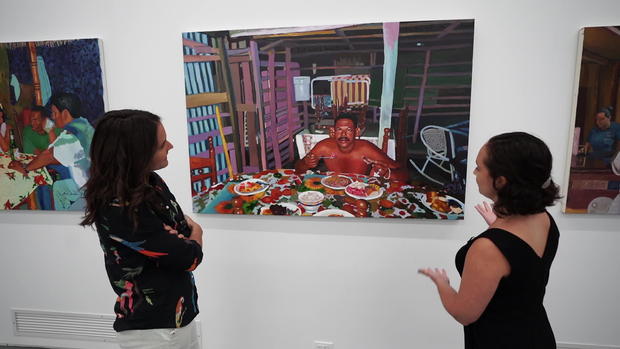
Co-curator Susanna Temkin said, “This is a survey of contemporary Latin art, but it’s race, family, commodities, and consumption.”
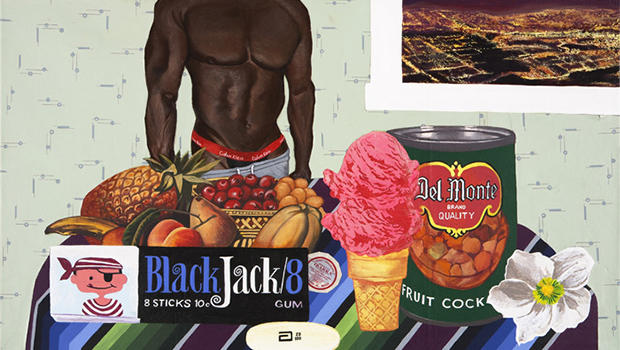
Temkin, for example, pointed out the abundance of food.
Joe Iteryl / Elm Theo Delvalio
Exhibits: Celebration of color, culture and identity.
CBS News
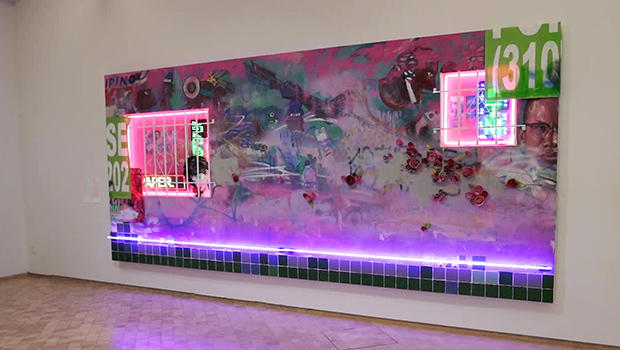
There are snapshots of everyday life found in photographs and paintings.
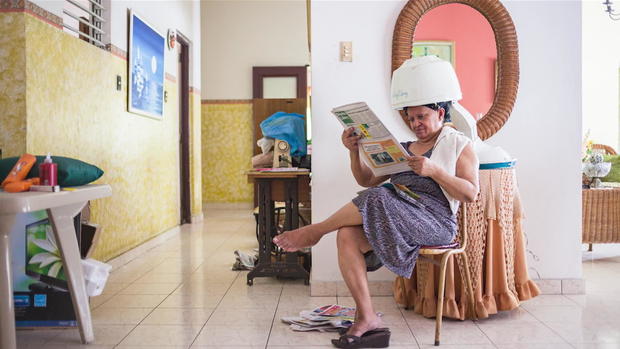
Groana Melendez / Elm Theo Delvalio
There are also deeper and darker themes, such as Vincent Valdez’s series of works entitled “Strange Fruits”. “They are intended to evoke Mexican-Americans lynched in the course of American history, which is part of our overlooked history,” Temkin said.
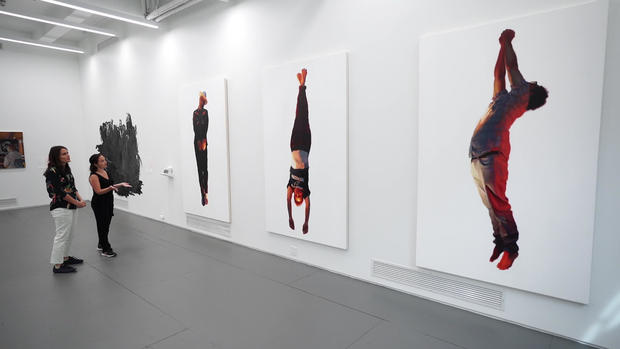
CBS News
The power of calculation is woven into many pieces. The thread has been in the heart of Elm Theo del Barrio since it was founded half a century ago by a few people sitting in a cold, dark basement.
Hiram Marine Stay recalled as follows. “We were breathtaking and talking about the construction of the museum, and we asked each other,” Does anyone know anything about the museum? ” And everyone looked and said, “I don’t know. I don’t know.”
Marinestay was one of Elmseo’s early directors, who eventually helped build one of the country’s leading Latin cultural institutions.
“We brought in the best artists to train our children,” he said.
Marinestay is also a highly regarded photographer who was born and raised just a few blocks away.
Luciano asked, “What does El Barrio mean to you?”
“El Barrio is where I grew up,” he said. “That’s what I know. That’s what I’m comfortable with. [in].. I feel it. It’s my house. “
From the moment he picked up the camera, Marinestay was rebelling against the story of how Puerto Ricans and Latinos were portrayed. “Most of our images were when they were handcuffed,” he said. “Most of our images [when] We have engaged in some sort of violence, or violence against us. So I was very, very angry about it. I was also very naive, but I thought I could balance it. I could give another expression of it, and we could show us that we are not.we are this.. And I’m still working on it. “
Like artists like Lucia Hiero, it fulfills the mission of museums and culture.
Luciano asked, “What do you hope to bring to the next generation by seeing your art?”
“Their story is important,” she replied. “Everything they experience and see is worth it, you know, make art, and you know, share it with the world.”
Detailed information:
A story produced by Gabriel Falcon. Editor: Carol Ross.

